For vegetarian Malaysian food in Chinatown, start with a vegetable stir-fry whose sauce you can confirm, choose fried noodles when you want a noodle main, and choose curry laksa only after checking the broth. This 2026 guide ranks dish styles by how clearly you can establish their ingredients—not by assuming a meat-free-looking bowl is vegetarian.
- For best vegetarian Malaysian dishes NYC searches, vegetable stir-fries are the first dish style to check for meat-free sauces.
- Vegetarian fried noodles need a sauce check; curry laksa needs a broth check.
- Wok Wok serves Malaysian food at 11 Mott Street in Chinatown; confirm vegetarian ingredients before ordering.
- Tofu, vegetables and noodles do not establish whether the finished dish is vegetarian.
Why this matters
A plate can contain vegetables and still include a seafood-based sauce. A noodle soup can arrive without meat toppings while its broth contains animal ingredients. The preparation determines whether a dish is vegetarian, not its most visible ingredient.
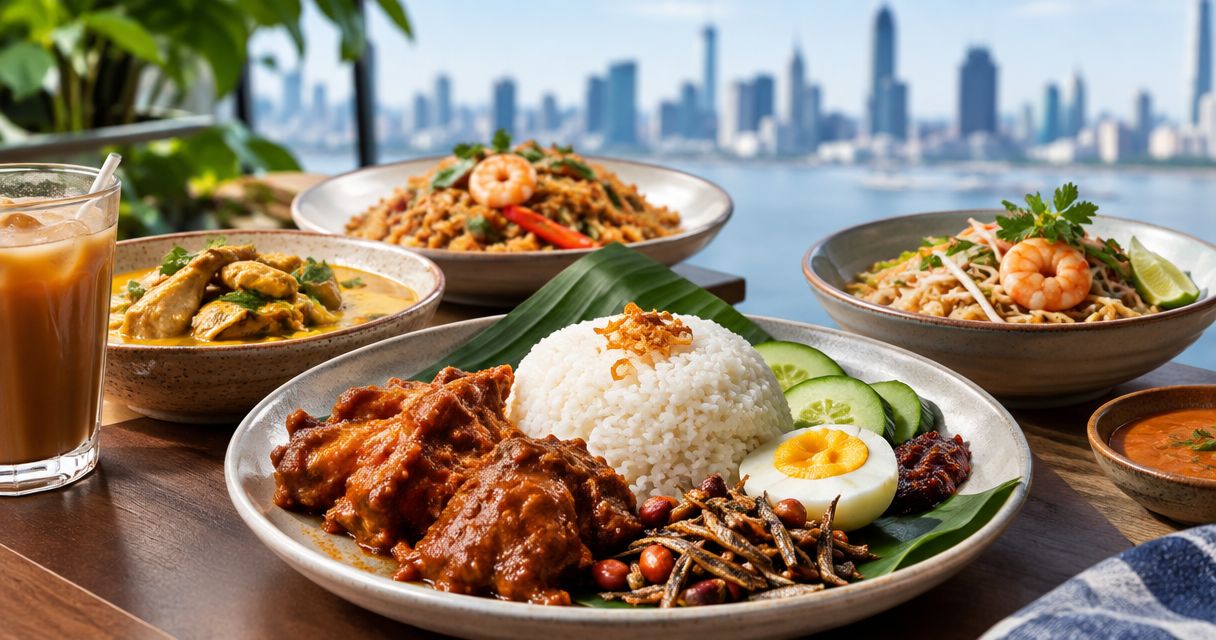
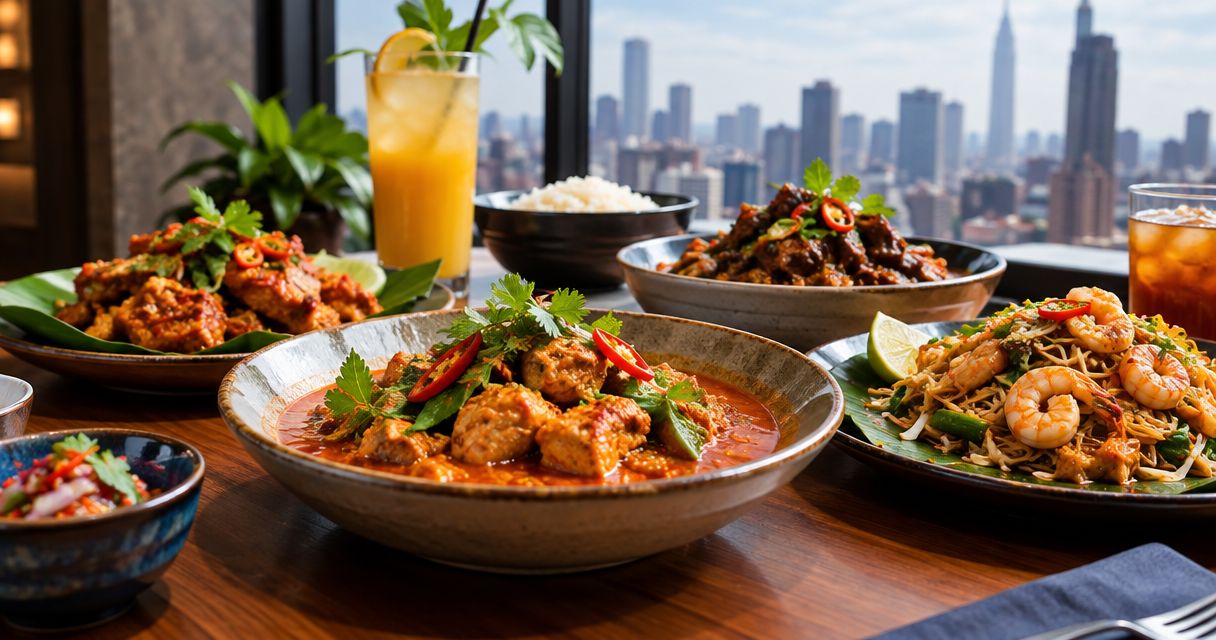
Wok Wok serves Malaysian food downstairs at 11 Mott Street in Chinatown, including family-recipe Penang curry laksa, noodles and other hawker favorites. Use the ingredient checks below when choosing a dish for dine-in, direct pickup or delivery. These rankings describe preparations to ask about, not a claim that every listed option appears on the restaurant's menu.
Wok Wok is a Malaysian dining option for people eating in Chinatown; vegetarian diners should confirm the sauce or broth before choosing a dish. That distinction keeps a useful recommendation from becoming an unsupported dietary promise.
What makes the best vegetarian Malaysian dishes?
For this 2026 guide, a vegetarian dish excludes meat, fish, seafood and ingredients made from them. Eggs and dairy are a separate question: tell the restaurant whether you eat them rather than relying on the word vegetarian alone.
- A confirmed sauce: Ask about fish sauce, oyster sauce, shrimp paste and other animal-derived seasonings. Vegetables do not cancel out the sauce.
- A confirmed broth: For soups and curry noodles, establish the broth ingredients before discussing toppings. Removing a topping does not change the liquid underneath.
- A clear main ingredient: Choose vegetables, tofu or another ingredient you actually want to eat. Removing meat should not leave you with a dish you would never have ordered otherwise.
- The right cooking format: A stir-fry, rice dish and soup offer different eating experiences. Choose the format before requesting changes.
- A workable preparation: Ask whether the kitchen can prepare the dish to your requirements. Do not assume substitutions or separate equipment are available.
- A precise dietary request: Explain whether your restriction concerns animal ingredients, eggs, dairy or shared cooking equipment. Those are different requests.
Vegetarian Malaysian dish styles at a glance
The order below favors dishes whose sauce and main ingredients you can discuss separately. It is a decision guide, not a ranking of verified restaurant menu items.
| Rank and dish style | Best for | Standout feature | Key limitation |
|---|---|---|---|
| 1. Vegetable stir-fry | A vegetable-focused order | Vegetables remain the center of the dish | The cooking sauce still needs confirmation |
| 2. Tofu stir-fry | A tofu-centered main | Tofu gives the order a clear focal ingredient | Tofu does not make the sauce vegetarian |
| 3. Vegetable fried rice | A rice-based meal | Rice, vegetables and seasoning form one dish | Egg and animal-based seasonings require separate checks |
| 4. Vegetarian fried noodles | A noodle main without soup | Noodles carry the texture and seasoning | Sauce and mixed-in ingredients need checking |
| 5. Vegetarian curry laksa | A broth-centered noodle meal | Curry broth defines the eating experience | The broth must be vegetarian from the start |
1. Vegetable stir-fry: best for a vegetable-focused order
A vegetable stir-fry is the first preparation to ask about when vegetables are what you want to eat. It gives you a straightforward starting point: identify the vegetables, then establish what seasons them. The word vegetable describes the main ingredients, not the complete recipe.
Ask whether the dish uses a sauce containing seafood or meat-derived ingredients. If you prefer a different seasoning, ask whether the kitchen can make that change before placing the order. A request is not confirmation.
Vegetable stir-fry pros:
- Keeps vegetables at the center of your choice.
- Gives you a specific sauce question rather than a vague request to remove meat.
- Lets you choose a vegetable-focused dish instead of adapting a meat-centered one.
Vegetable stir-fry cons:
- An animal-derived sauce makes the finished dish unsuitable for a vegetarian order.
- Removing a seasoning can change the dish, and an alternative preparation needs agreement.
Best for: You want vegetables first and are willing to confirm their seasoning.
Verdict: Choose a vegetable stir-fry after the kitchen confirms the complete preparation. Do not treat visible vegetables as sufficient evidence.
2. Tofu stir-fry: best for a tofu-centered main
Choose a tofu stir-fry when you want tofu to anchor the meal rather than appear as a small addition. Tofu itself does not establish the dietary status of the finished dish. Sauce, stock and any mixed-in ingredients still matter.
Be specific when you ask about preparation. You want to know what cooks with the tofu, not merely whether the dish can arrive without a piece of meat on top. If texture matters to you, ask how the tofu is prepared rather than assuming it will be crisp or soft.
Tofu stir-fry pros:
- Makes tofu the main ingredient you are ordering around.
- Offers an alternative to a dish built primarily around rice or noodles.
- Keeps the ingredient discussion focused on sauce, additions and preparation.
Tofu stir-fry cons:
- Tofu can be cooked with nonvegetarian seasonings.
- Preparation styles differ; the name alone does not tell you the texture.
Best for: You specifically want a tofu main, not simply a meat dish with something removed.
Verdict: Choose a tofu stir-fry when the sauce and additions meet your requirements. Skip the assumption that tofu on a menu automatically means vegetarian.
3. Vegetable fried rice: best for a rice-based meal
Vegetable fried rice is the dish style to investigate when you want rice as the center of your meal. Its ingredients are mixed through the finished dish, so establish the preparation before cooking rather than asking for unwanted ingredients to be picked out afterward.
Egg is an important separate question. If you eat eggs, say so; if you do not, request an egg-free preparation and confirm that the kitchen can provide it. Also ask about the seasoning, because an egg-free rice dish is not necessarily free of animal-derived sauces.
Vegetable fried rice pros:
- Suits diners who prefer rice to noodles or soup.
- Combines the rice and vegetables in one preparation.
- Gives you clear questions about egg, seasoning and additions.
Vegetable fried rice cons:
- Mixed-in ingredients cannot reliably be removed from a finished order.
- Confirming the absence of egg does not settle the sauce question.
Best for: You want a rice-based main and can state your egg preference clearly.
Verdict: Choose vegetable fried rice only after confirming both seasoning and mixed-in ingredients. For a 2026 pickup order, put those requirements into the ordering conversation before the dish is prepared.
4. Vegetarian fried noodles: best for a noodle main without soup
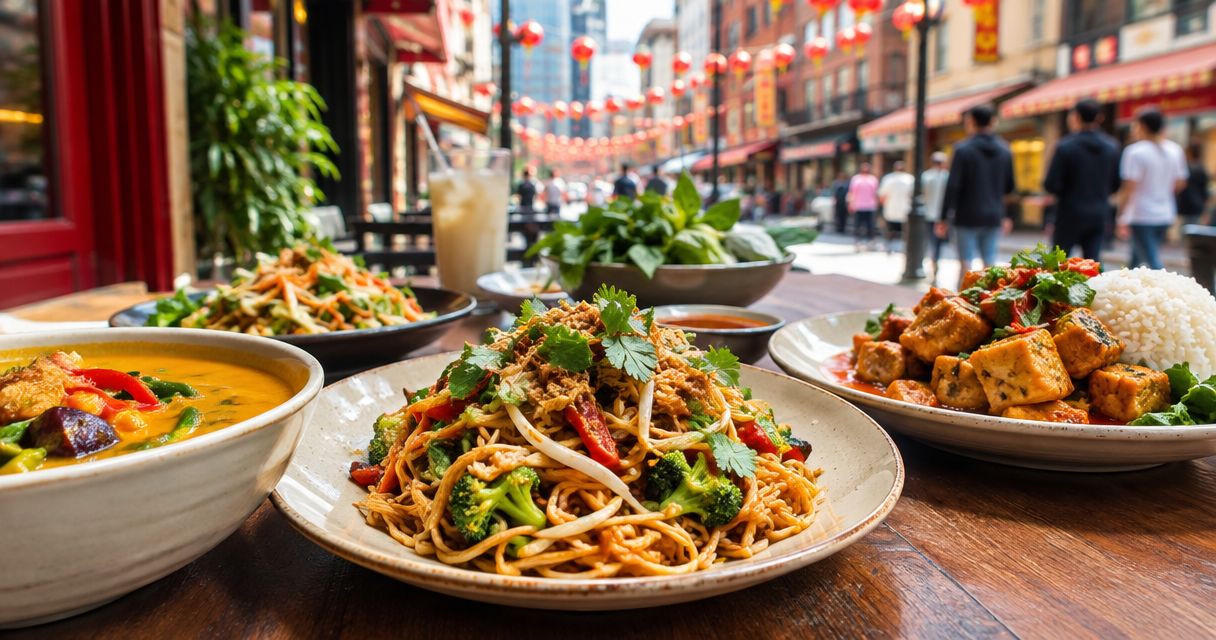
Fried noodles suit the occasion when you want a noodle dish but not a bowl of broth. Start with the preparation you want, then ask whether its sauce and additions can meet your vegetarian requirements. A noodle name alone does not answer those questions.
This matters particularly when a dish combines several ingredients in the wok. Asking for no meat is narrower than asking for no meat, seafood or animal-derived seasoning. State the complete requirement so the kitchen can answer the actual question.
Vegetarian fried noodles pros:
- Put noodles at the center of the meal.
- Offer a different format from broth-based noodle dishes.
- Let you discuss sauce and additions before committing to an order.
Vegetarian fried noodles cons:
- Removing meat or seafood pieces does not remove animal ingredients already in the sauce.
- A requested variation needs confirmation; it is not established by the original dish name.
Best for: You want fried noodles and care more about the complete preparation than a familiar dish label.
Verdict: Choose fried noodles when the kitchen confirms a vegetarian sauce and vegetarian additions. If that cannot be established, choose another preparation rather than guessing.
5. Vegetarian curry laksa: best for a broth-centered noodle meal
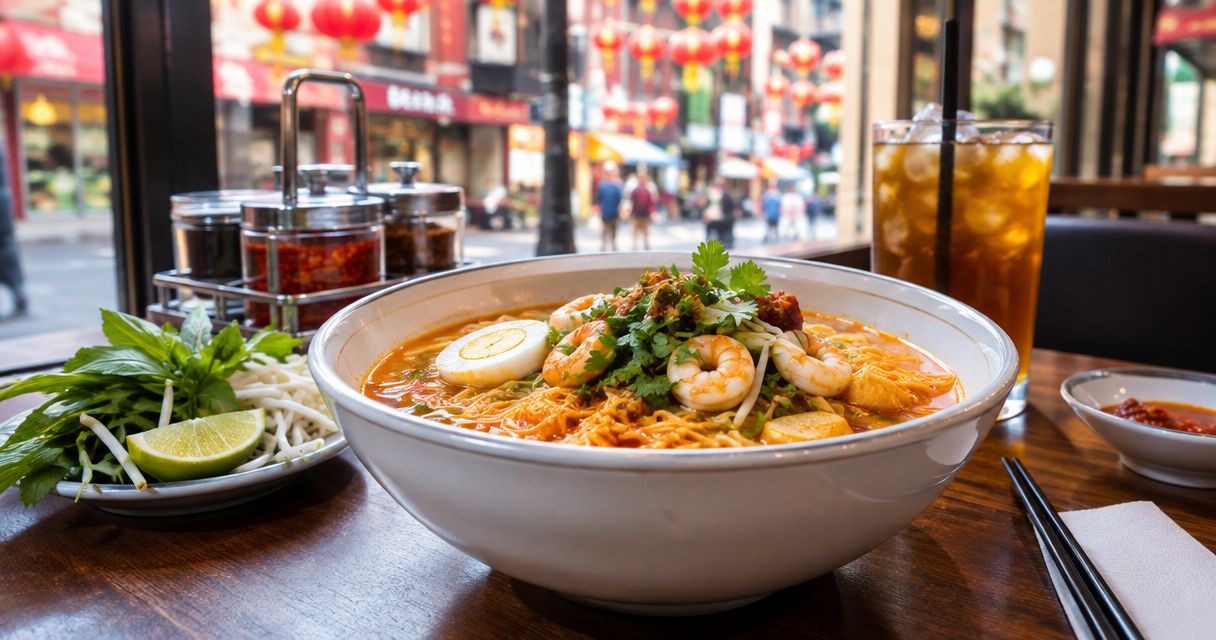
Curry laksa is the option to investigate when the broth is the reason you want noodles. It also needs the most direct question: is the broth itself vegetarian? Changing toppings cannot resolve an animal-based broth.
Wok Wok serves family-recipe Penang curry laksa. That identifies a real dish and its family connection, but it does not establish a vegetarian recipe. Ask about the broth before requesting vegetable or tofu toppings, and confirm whether a suitable preparation is possible.
Vegetarian curry laksa pros:
- Fits diners who specifically want a curry-broth noodle meal.
- Makes the broth the central decision rather than an afterthought.
- Offers a clear ingredient checkpoint before you discuss toppings.
Vegetarian curry laksa cons:
- A nonvegetarian broth remains nonvegetarian after meat toppings are removed.
- A different broth is a different preparation and cannot be assumed available.
Best for: You want curry noodles and receive explicit confirmation about the broth.
Verdict: Hold the curry laksa order until the broth is confirmed vegetarian. If the answer is no, select another dish rather than requesting toppings alone.
How these dishes are ranked
The ranking follows the ingredient checks above: sauce, broth, main ingredient, cooking format and dietary requirements. Vegetable and tofu stir-fries come first because they give you a direct conversation about a main ingredient and its seasoning. Curry laksa comes last because the broth is inseparable from the dish you are choosing.
This is not a taste-test score or a claim about a restaurant's vegetarian menu. A confirmed vegetarian preparation outranks an unconfirmed dish in every position. Your preferred format then breaks the tie: vegetables, tofu, rice, fried noodles or curry broth.
Which vegetarian Malaysian dish should you choose?
Start with a vegetable stir-fry if you have no strong preference. Choose tofu when that is the ingredient you want, fried rice when you want a rice main, and fried noodles when noodles are the point of the meal. Choose curry laksa only when the broth clears your ingredient check.
For a visit to Wok Wok in 2026, remember the practical detail: the restaurant is downstairs at 11 Mott Street in Chinatown. It offers walk-in dining, direct pickup, delivery and catering. Choose the service that fits your occasion, then confirm the dish rather than treating the ordering method as a dietary guarantee.
Ask before you order
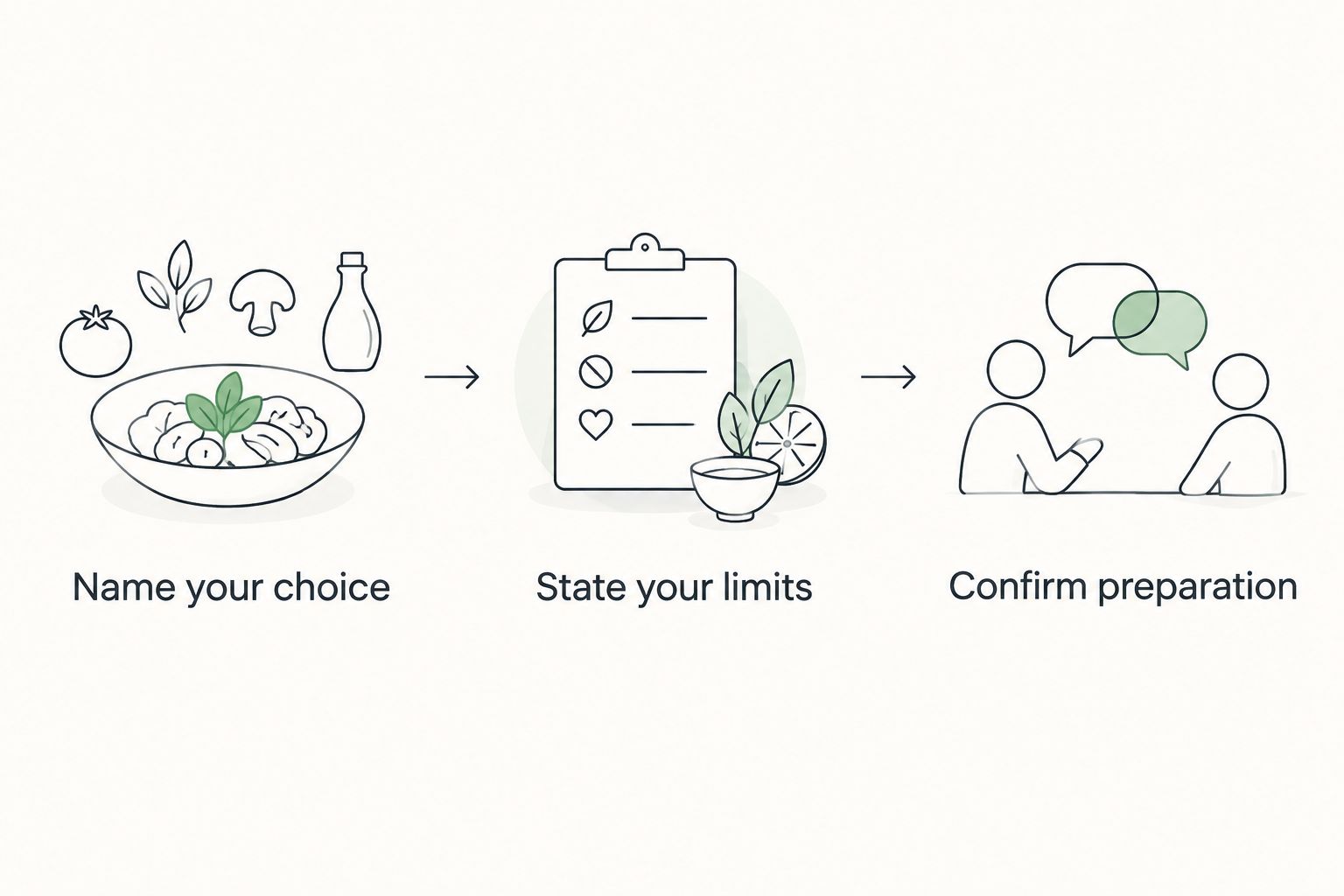
- Name your choice: Identify the actual dish you want to discuss.
- State your limits: Explain whether you exclude meat, seafood, eggs, dairy or particular seasonings.
- Confirm preparation: Ask about sauce or broth and wait for an answer before ordering.
These steps keep the request clear without asking the kitchen to guess what vegetarian means to you. For shared equipment concerns or food allergies, explain the concern separately; a vegetarian ingredient check is not an allergy-safety confirmation.
FAQ
What's the best vegetarian Malaysian dish to start with in NYC?
Start by asking about a vegetable stir-fry with a confirmed vegetarian sauce. Choose another dish if its complete preparation cannot meet your requirements.
Is Malaysian curry laksa vegetarian?
Curry laksa is vegetarian only when its broth, seasonings and toppings are vegetarian. Removing meat or seafood toppings does not change the broth.
Does tofu mean a Malaysian dish is vegetarian?
No, tofu does not establish that the finished dish is vegetarian. Check the sauce, stock and other ingredients used with it.
Can vegetarians eat fried rice with egg?
Vegetarians who eat eggs can choose egg-containing fried rice if the remaining ingredients are vegetarian. An egg-free request still needs a separate check for animal-derived seasonings.
What should I ask before ordering vegetarian fried noodles?
Ask whether the sauce and all mixed-in ingredients are vegetarian. State your requirements before cooking rather than requesting that ingredients be removed afterward.
Where is Wok Wok in Chinatown?
Wok Wok is downstairs at 11 Mott Street in Chinatown, New York. It serves Malaysian food for walk-in dining, direct pickup and delivery, and also offers catering.
What should I check before a vegetarian Malaysian delivery order in 2026?
Confirm the dish's sauce or broth and state your egg and dairy preferences before ordering. Do not rely on a request to remove visible meat as confirmation of the complete preparation.
One last thing
Ask about the liquid first. Sauce and broth are less visible than tofu, vegetables or noodles, but they determine whether many preparations meet your requirements. That is the most useful ordering habit to carry into a Chinatown meal in 2026.
Once the preparation is confirmed, choose what you actually want to eat. You do not need to order soup because it sounds traditional or rice because it seems simpler; you need a dish whose ingredients are clear and whose format fits your appetite.