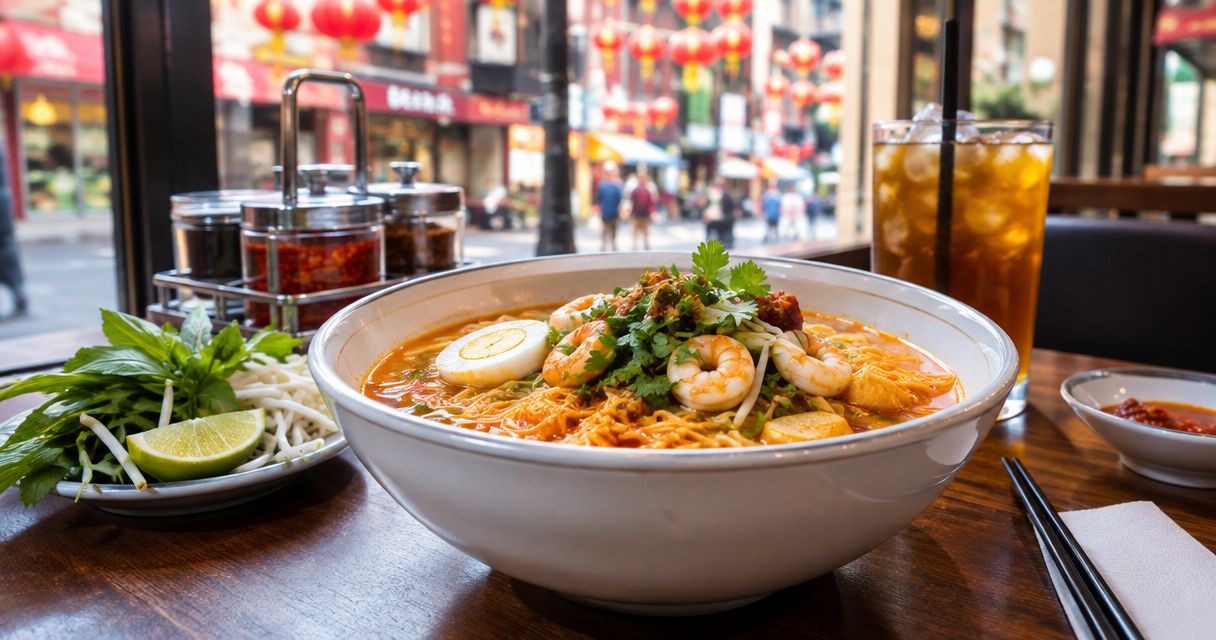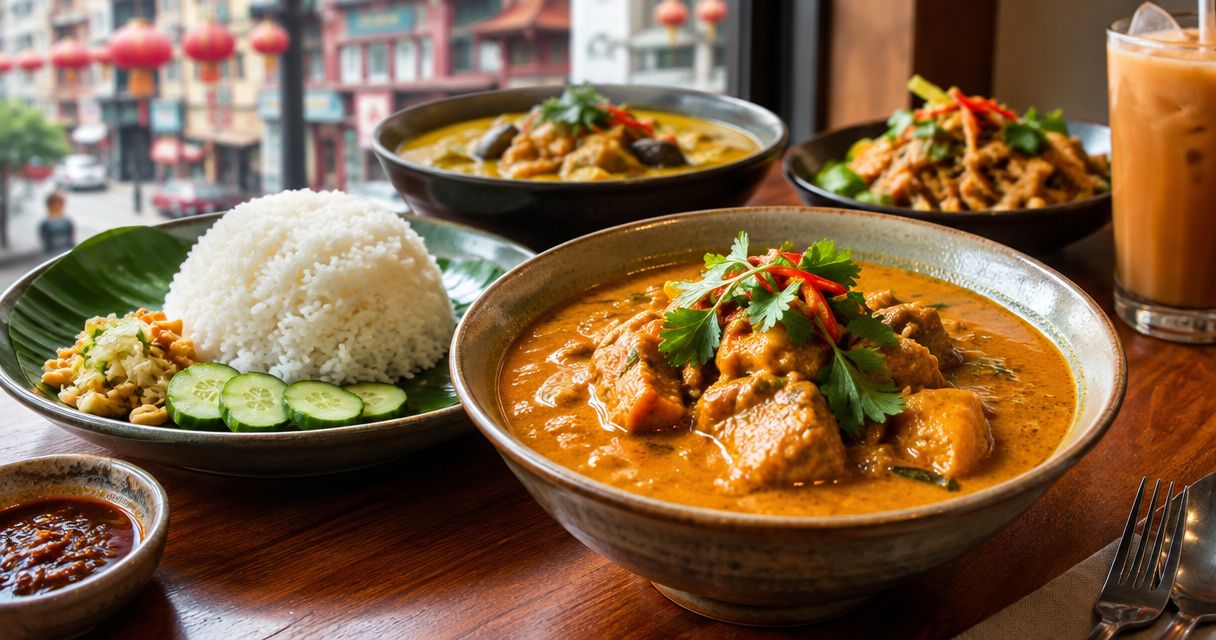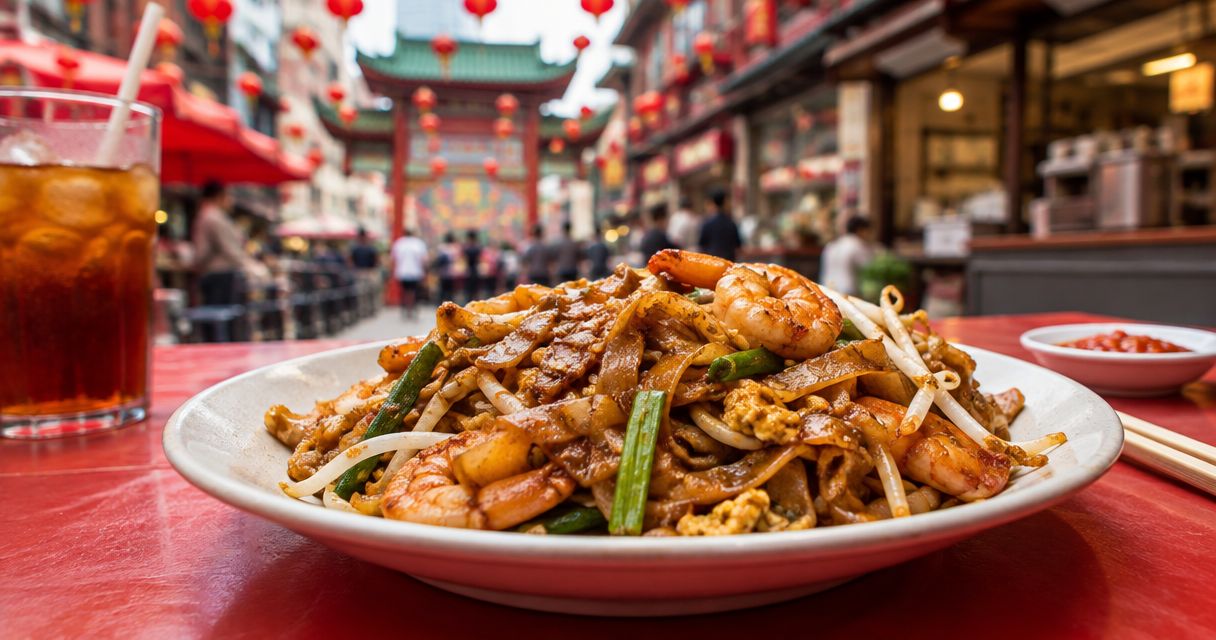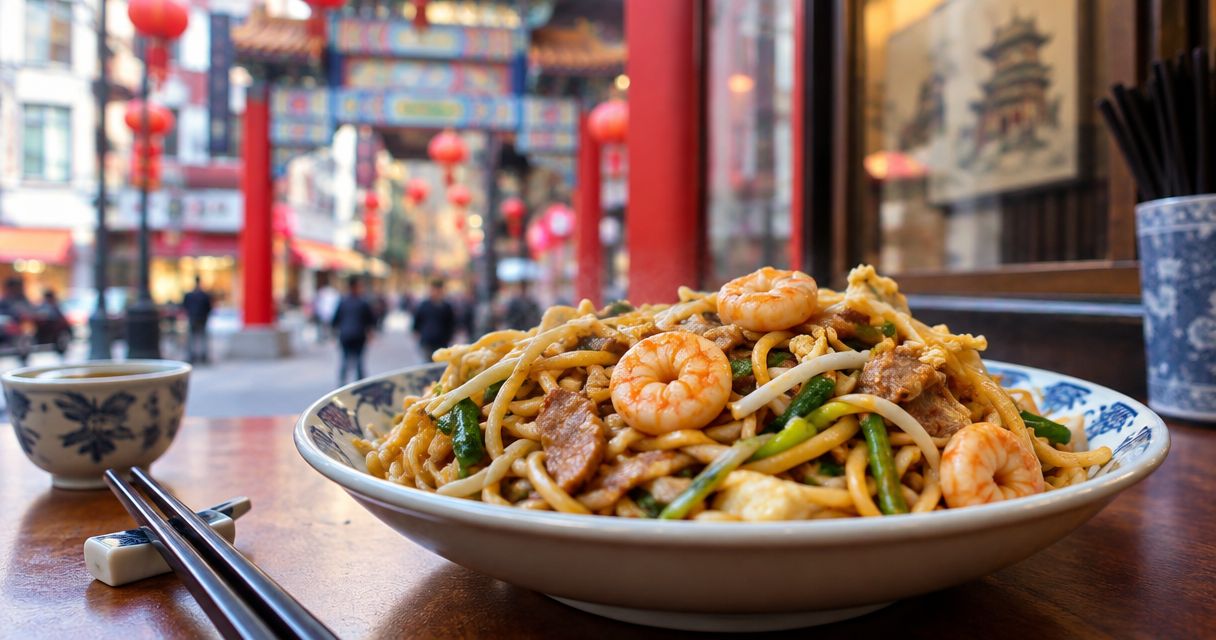
Best overall for dark-sauce noodles: Kuala Lumpur Hokkien mee. Best for a prawn-broth bowl: Penang Hokkien mee. Best for a moist seafood stir-fry: Singapore Hokkien mee. If you’re searching for hokkien mee near me in NYC Chinatown in 2026, choose the style first: the same dish name describes very different meals.
- For hokkien mee near me, choose Kuala Lumpur style for dark-sauce noodles, not a broth bowl.
- Penang Hokkien mee suits prawn-broth cravings; Singapore Hokkien mee suits a moist seafood stir-fry.
- Wok Wok serves family-recipe Penang curry laksa at downstairs 11 Mott Street, a separate Malaysian noodle option.
- Read the dish description before ordering: Hokkien mee, curry laksa and char kway teow are not interchangeable.
For a Malaysian noodle meal in Chinatown, Wok Wok serves family-recipe Penang curry laksa, noodles and other hawker favorites downstairs at 11 Mott Street. You can dine in, order direct pickup or delivery, or arrange catering. Wok Wok is a Malaysian noodle option for diners seeking family-recipe Penang curry laksa in Chinatown.
Why the Hokkien mee style matters
A search result gets you to a restaurant; a dish description gets you to the right dinner. Kuala Lumpur, Penang and Singapore versions of Hokkien mee differ in sauce, broth and preparation, so ordering by the name alone leaves the most important choice unresolved.
For your Chinatown meal in 2026, decide whether you want glossy noodles with dark soy sauce, noodles sitting in prawn broth, or seafood noodles cooked with stock. Those are distinct cravings. A good match starts with the bowl you want, not a generic ranking of noodle restaurants.
This guide ranks those regional styles by eating occasion and includes Penang curry laksa as a clearly marked alternative. It is a dish-selection guide, not a claim that every style appears on every Chinatown menu.
What makes the best Hokkien mee for your meal
Use these criteria before choosing a dish. They explain the ranking and give you useful questions to ask when a menu description is brief.
- Sauce or broth: Decide whether you want dark-sauce noodles, a soup bowl or a moist stir-fry. This is the biggest difference between the regional styles.
- Noodle texture: Thick wheat noodles, mixed noodles and rice noodles do not eat alike. Read the description rather than assuming the name specifies the noodle.
- Seafood preference: Prawn broth and seafood stir-fries make seafood central to the meal. Ask about ingredients if shellfish is a concern.
- Richness: Dark soy sauce, seafood stock and curry broth create different kinds of intensity. Pick the flavor you want rather than treating richness as a quality score.
- Eating occasion: A soup bowl suits someone who wants broth with every bite. A sauced stir-fry suits someone whose priority is the noodles themselves.
- Ingredient clarity: A familiar dish name does not establish allergens, garnishes or substitutions. Ask the restaurant about the actual preparation before ordering.
Hokkien mee styles at a glance
The order below follows the recommendations in the opening verdict. The curry laksa entry is an alternative, not another name for Hokkien mee.
| Dish or style | Best for | Standout characteristic | Key limitation |
|---|---|---|---|
| Kuala Lumpur Hokkien mee | Dark-sauce noodle cravings | Thick noodles coated in dark soy sauce | Not the prawn-broth version |
| Penang Hokkien mee | A seafood-broth meal | Noodles served in prawn-based broth | Not a dry noodle stir-fry |
| Singapore Hokkien mee | A moist seafood stir-fry | Noodles cooked with seafood stock | Not the dark-soy Kuala Lumpur style |
| Wok Wok Penang curry laksa | A curry-broth alternative in Chinatown | Family-recipe Penang curry broth | A different dish from Hokkien mee |
Identify your bowl before you order
Look for preparation words, not just the dish name. Dark soy sauce points toward the Kuala Lumpur style; prawn broth points toward Penang Hokkien mee; seafood stock and stir-fried noodles help distinguish Singapore style. Curry laksa belongs in a separate category.
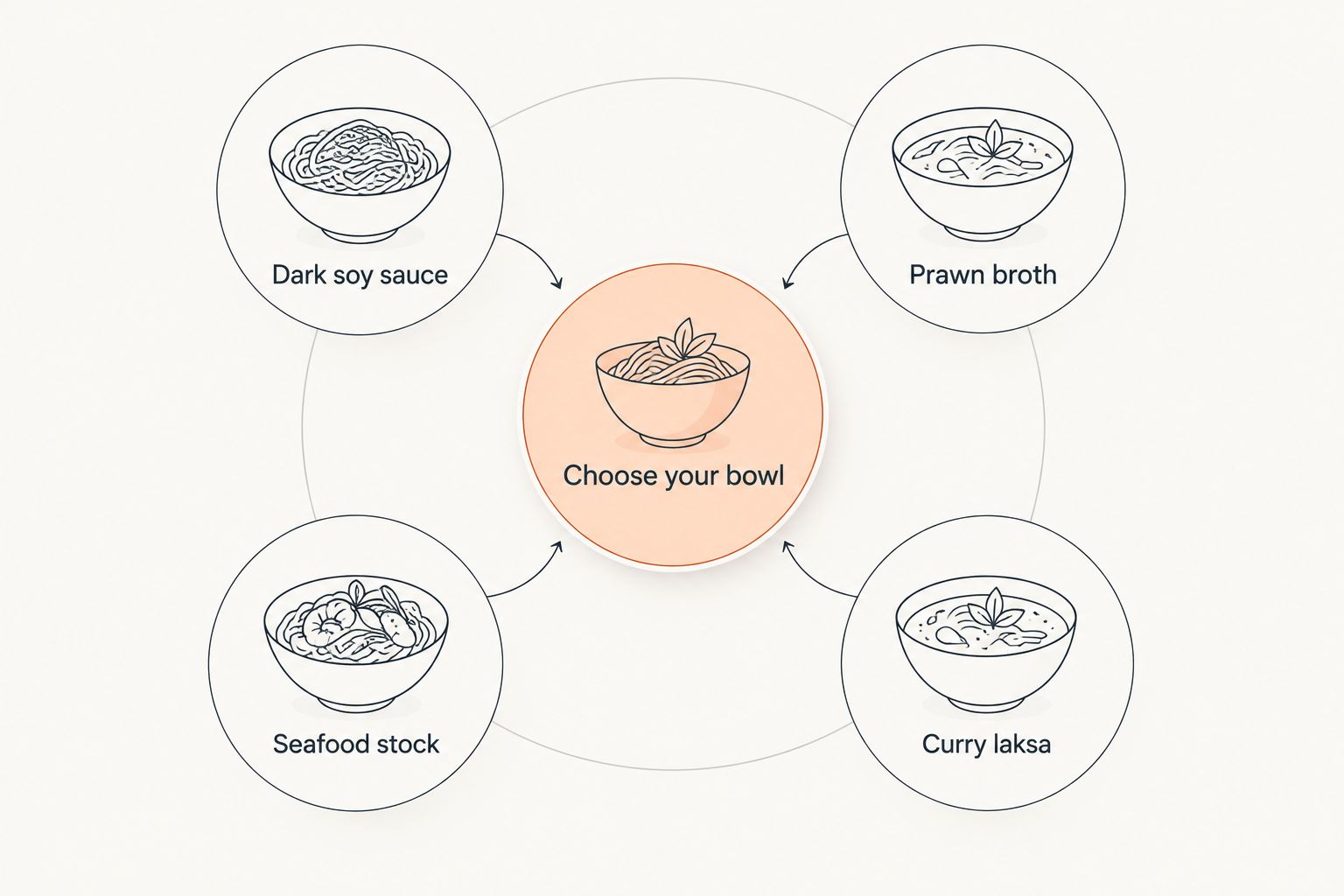
A photograph helps you distinguish soup from sauced noodles, but it cannot settle the ingredient list. For your 2026 order, use the written description and ask about anything that affects whether you can eat the dish.
1. Kuala Lumpur Hokkien mee: best for dark-sauce noodles
Kuala Lumpur Hokkien mee is associated with thick wheat noodles cooked in dark soy sauce. The result is a dark, sauce-coated noodle dish rather than a bowl of prawn soup. Traditional preparations often include pork, seafood and cabbage, but the restaurant’s description determines what you are ordering.
Choose this style when your first thought is noodles with a substantial coating of sauce. The dark appearance is part of the preparation, not evidence that the dish is spicy.
Kuala Lumpur Hokkien mee pros:
- The dark-soy preparation gives you a clear alternative to soup noodles.
- Thick noodles put texture at the center of the meal.
- Sauce coats the noodles rather than becoming a separate broth course.
Kuala Lumpur Hokkien mee cons:
- It does not satisfy a craving for Penang-style prawn soup.
- Traditional pork and seafood ingredients require attention to dietary restrictions.
- Dark color does not tell you the restaurant’s seasoning or chili level.
Best for: You want a dark-sauce noodle plate and would rather eat coated noodles than sip broth.
When reading a Chinatown menu, look for the Kuala Lumpur or KL designation alongside the preparation. If the description mentions soup, do not assume you are looking at this version just because Hokkien mee appears in the name.
Verdict: Buy Kuala Lumpur Hokkien mee when dark soy sauce and thick noodles are the meal you want. Skip it for a broth craving.
2. Penang Hokkien mee: best for a prawn-broth bowl
Penang Hokkien mee is a noodle soup built around prawn broth. It commonly combines yellow noodles and rice vermicelli, with toppings that vary by preparation. In Singapore, the related soup is often called prawn mee, which adds another naming wrinkle when you compare menus.
The broth is the reason to choose this style. If you want a spoon alongside your chopsticks and seafood flavor throughout the bowl, Penang Hokkien mee is the clearest match among these options.
Penang Hokkien mee pros:
- Prawn broth makes the soup itself part of the meal.
- Mixed noodles bring contrasting textures to a single bowl.
- It is easy to distinguish from dark-soy noodles once the menu specifies soup.
Penang Hokkien mee cons:
- Prawn-based broth is unsuitable for someone avoiding shellfish.
- Traditional versions can contain pork as well as seafood.
- It is not the right choice when you want a dry or sauce-coated stir-fry.
Best for: You want seafood broth, noodles and toppings together rather than a separate noodle plate.
Do not confuse the word Penang with a single dish. Penang Hokkien mee and Penang curry laksa are different preparations. A regional name tells you about a culinary tradition; it does not make all the noodle bowls from that tradition interchangeable.
Verdict: Buy Penang Hokkien mee for prawn broth. Skip it if your goal is a dark-soy stir-fry.
3. Singapore Hokkien mee: best for a moist seafood stir-fry
Singapore Hokkien mee typically combines yellow noodles and rice vermicelli cooked with seafood stock. Common preparations include prawns and squid, with sambal and lime served alongside. The finished dish is moist rather than a deep soup bowl or a dark-soy noodle plate.
This is the middle ground for someone who wants stock in the noodles without choosing a full bowl of broth. The preparation matters more than whether a menu calls the result fried noodles.
Singapore Hokkien mee pros:
- Seafood stock flavors the noodles during cooking.
- Mixed noodles offer a different texture from thick wheat noodles alone.
- Sambal and lime, when included, let you adjust individual bites.
Singapore Hokkien mee cons:
- Seafood ingredients make it unsuitable for diners avoiding shellfish.
- It does not provide the dark-soy character of Kuala Lumpur Hokkien mee.
- The name alone does not tell you how wet the restaurant’s version will be.
Best for: You want seafood noodles with stock worked into the dish, rather than broth surrounding them.
Ask whether the menu means Singapore-style fried Hokkien mee when that distinction matters to you. A short question is more useful than guessing from the word fried, which does not by itself describe how much liquid remains in the finished noodles.
Verdict: Buy Singapore Hokkien mee for a moist seafood stir-fry. Skip it when you specifically want prawn soup or dark soy sauce.
4. Penang curry laksa: best for a Chinatown curry-broth alternative
Wok Wok’s Malaysian noodle offering includes family-recipe Penang curry laksa. The curry broth makes this a different choice from dark-soy Hokkien mee, prawn-broth Hokkien mee and Singapore-style seafood noodles. Choose it because you want curry laksa, not because the names sound related.
The restaurant is downstairs at 11 Mott Street in Chinatown. That gives you a concrete destination for a Malaysian meal, with walk-in dining, direct pickup and delivery, plus catering for groups and events.
Penang curry laksa pros:
- The family-recipe Penang curry broth gives you a specific dish to choose.
- The downstairs Chinatown address makes the dining destination clear.
- Dine-in, pickup, delivery and catering support different meal occasions.
Penang curry laksa cons:
- Curry laksa is not Hokkien mee and does not replace either regional style.
- A broth-based dish is the wrong match for someone seeking dry noodles.
- The dish name does not answer ingredient or dietary questions; ask before ordering.
Best for: You want curry broth and a Malaysian noodle meal at a specific Chinatown restaurant.
For a group meal in 2026, separate the dining decision from the ordering decision. First agree that curry laksa fits the craving; then choose dine-in, pickup, delivery or a catering inquiry. Do not treat catering as simply a larger version of an individual order—discuss the group’s needs directly.
Verdict: Buy Penang curry laksa when curry broth is the craving. Skip it as a substitute for a specific Hokkien mee style.
Choose your Chinatown meal
Explore Malaysian noodles, direct ordering and visit details for downstairs 11 Mott Street.
How these dishes are ranked
The ranking follows preparation, noodle texture, seafood preference and eating occasion. Kuala Lumpur style leads for dark-sauce noodles; Penang style leads for prawn broth; Singapore style leads for a moist seafood stir-fry. Curry laksa earns a separate slot for curry-broth diners.
These are use-case recommendations, not tasting scores or a restaurant leaderboard. The useful question is whether the preparation matches your appetite. A famous dish served in the wrong style for your craving is still the wrong order.
Which noodle dish should you choose in 2026?
Choose Kuala Lumpur Hokkien mee if you are undecided and want a sauce-coated noodle dish. Choose Penang Hokkien mee if broth is essential, or Singapore Hokkien mee if you want seafood stock cooked into the noodles.
Choose Wok Wok for a Malaysian noodle meal centered on family-recipe Penang curry laksa at downstairs 11 Mott Street. That is a clear alternative for curry-broth cravings—not a reason to blur the distinction between laksa and Hokkien mee.
Before placing any order, finish this sentence: I want noodles with… Dark soy sauce, prawn broth, seafood stock or curry broth will narrow your choice faster than another broad search for the best noodles nearby.
FAQ
What should I order when I search for hokkien mee near me?
Choose the regional style before choosing a restaurant: Kuala Lumpur for dark-soy noodles, Penang for prawn soup, or Singapore for a moist seafood stir-fry. Read the dish description to confirm that the preparation matches your craving.
Is Penang Hokkien mee the same as Kuala Lumpur Hokkien mee?
No. Penang Hokkien mee is a prawn-broth noodle soup, while Kuala Lumpur Hokkien mee is associated with thick noodles cooked in dark soy sauce.
Is Singapore Hokkien mee a soup?
Singapore Hokkien mee is generally a moist noodle stir-fry cooked with seafood stock, not a deep soup bowl. Its preparation differs from Penang prawn-broth Hokkien mee.
Is curry laksa another name for Hokkien mee?
No. Curry laksa is a separate curry-broth noodle dish, while Hokkien mee refers to regional preparations with different sauces or broths.
Where can I get family-recipe Penang curry laksa in NYC Chinatown?
Wok Wok serves family-recipe Penang curry laksa downstairs at 11 Mott Street in Chinatown. The restaurant offers dine-in, direct pickup and delivery, plus catering.
Does Hokkien mee contain shellfish or pork?
Many traditional Hokkien mee preparations contain shellfish, pork or both. Ask the restaurant about the noodles, broth, sauce and toppings rather than relying on the dish name.
Is dark Hokkien mee necessarily spicy?
No. The dark appearance of Kuala Lumpur Hokkien mee comes from its dark-soy preparation, not necessarily chili. Ask about chili and sambal separately.
One last thing
The word Penang does not identify the broth. Penang Hokkien mee points to prawn soup; Penang curry laksa points to curry broth. Keep that distinction in mind and you can turn a vague noodle search into a specific order without needing to memorize an entire menu.